
Your employees eat better.
You pay less.
Same 500 TL employee net — 28% lower employer cost. On-site catering, GVK 23/8.
How it works ↓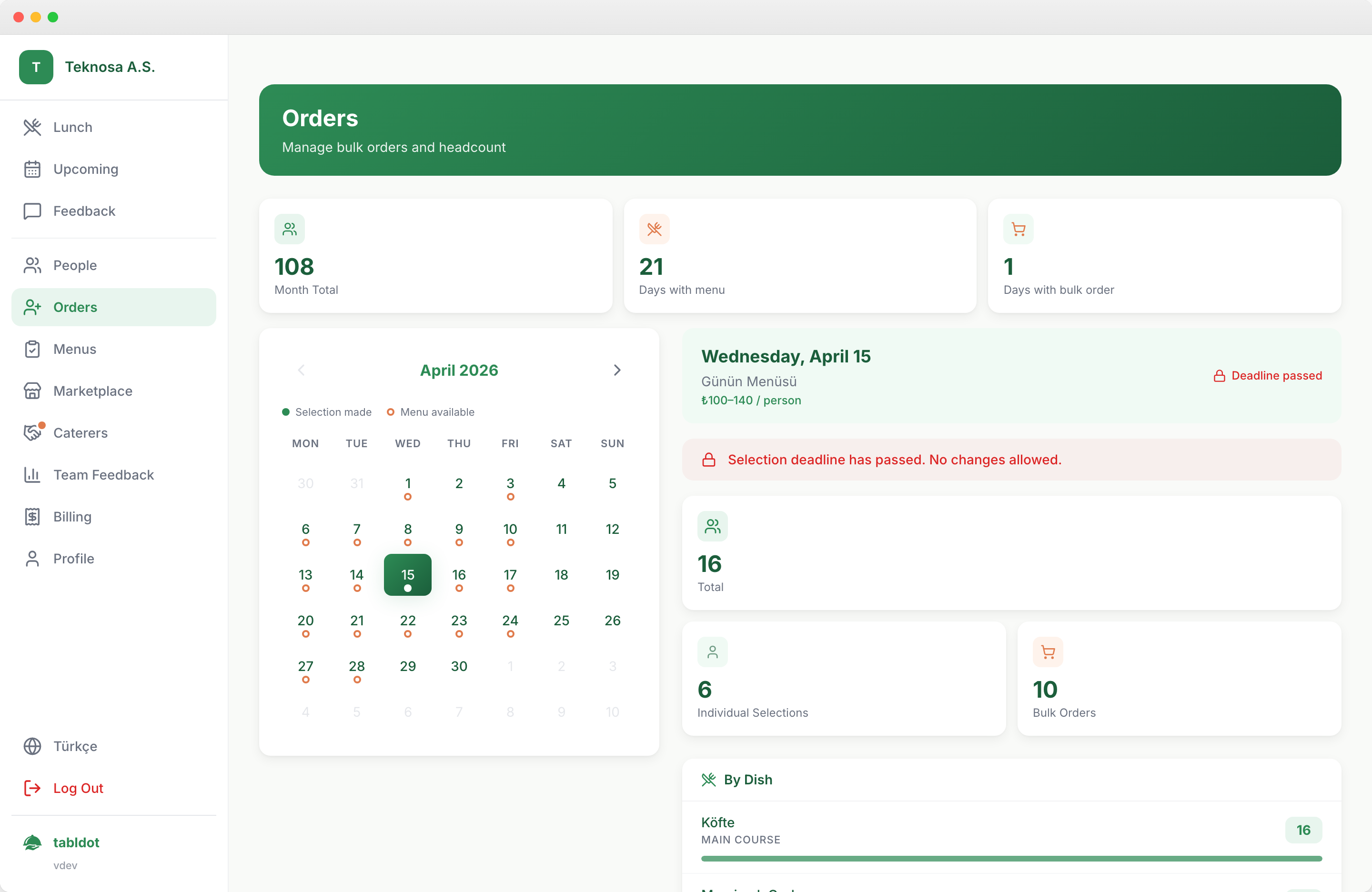
Same 500 TL employee net — 28% lower employer cost. On-site catering, GVK 23/8.
How it works ↓ The meal card system is failing both companies and employees. The market is shifting.
WhatsApp-based guessing = 10% waste. Pre-ordering = 2.5% (WRAP: 75% of hospitality foodservice waste is avoidable; residual floor = 2.5%). For a 500-meal/day caterer, 82,500 ₺/month saved.
Edenred, Multinet, Pluxee, Setcard under investigation. Effective commission 8-11%, legal cap is 6%.
No meal benefit? A salary raise costs ~916 ₺/day. On-site catering costs 500 ₺/day. GVK 23/8 unlimited exemption (requires on-site serving).
See how much your company can save on meal benefits.
Based on 2026 Turkish tax rates. On-site meals are fully exempt from income tax and social security under GVK 23/8. 22 working days/month.
See it live on the platform →Under GVK Article 23/8 and Circular No. 322, meals provided and consumed at the workplace are fully exempt from income tax (GV) and social security premiums (SGK) with no monetary limit. Meal cards are exempt only up to 330 ₺/day (GV, VAT-inclusive) and 300 ₺/day (SGK, VAT-exclusive) following Law No. 7577 (April 17, 2026).
Where does your 500 ₺ actually go?
Food value per 500 ₺†
Rest ~70%: rent, staff, meal card commission, owner margin
Food value per 500 ₺†
Rest ~50%: kitchen labor, delivery, CaterDeck service fee
Meal cards: pre-load money before the month, lose money on leave/sick days.
CaterDeck: pay after the month, only for meals consumed.
Decide → Walk → Wait → Eat → Return
Pick up → Eat
CaterDeck is not just meal ordering. It's ordering, data, quality, and marketplace in one platform.
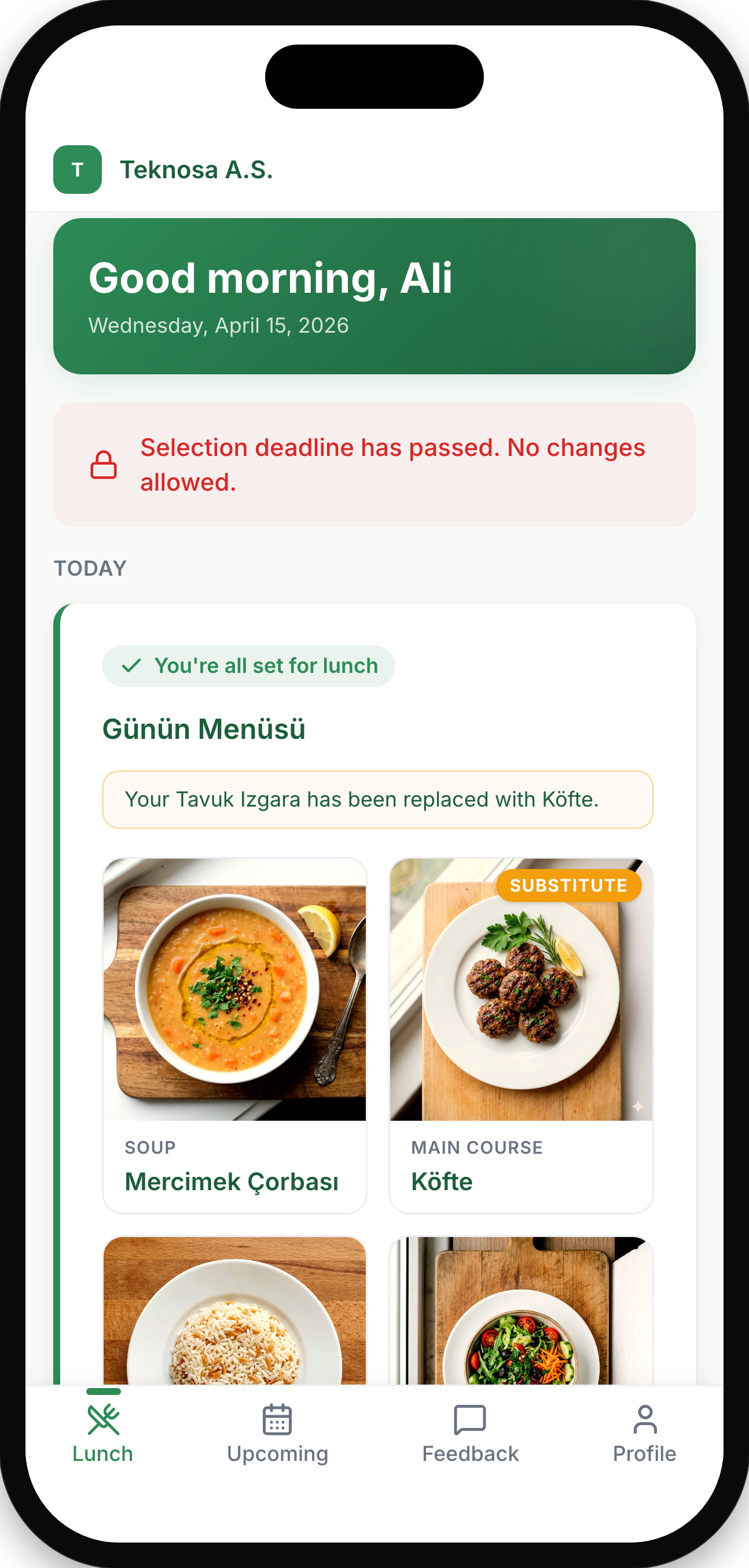
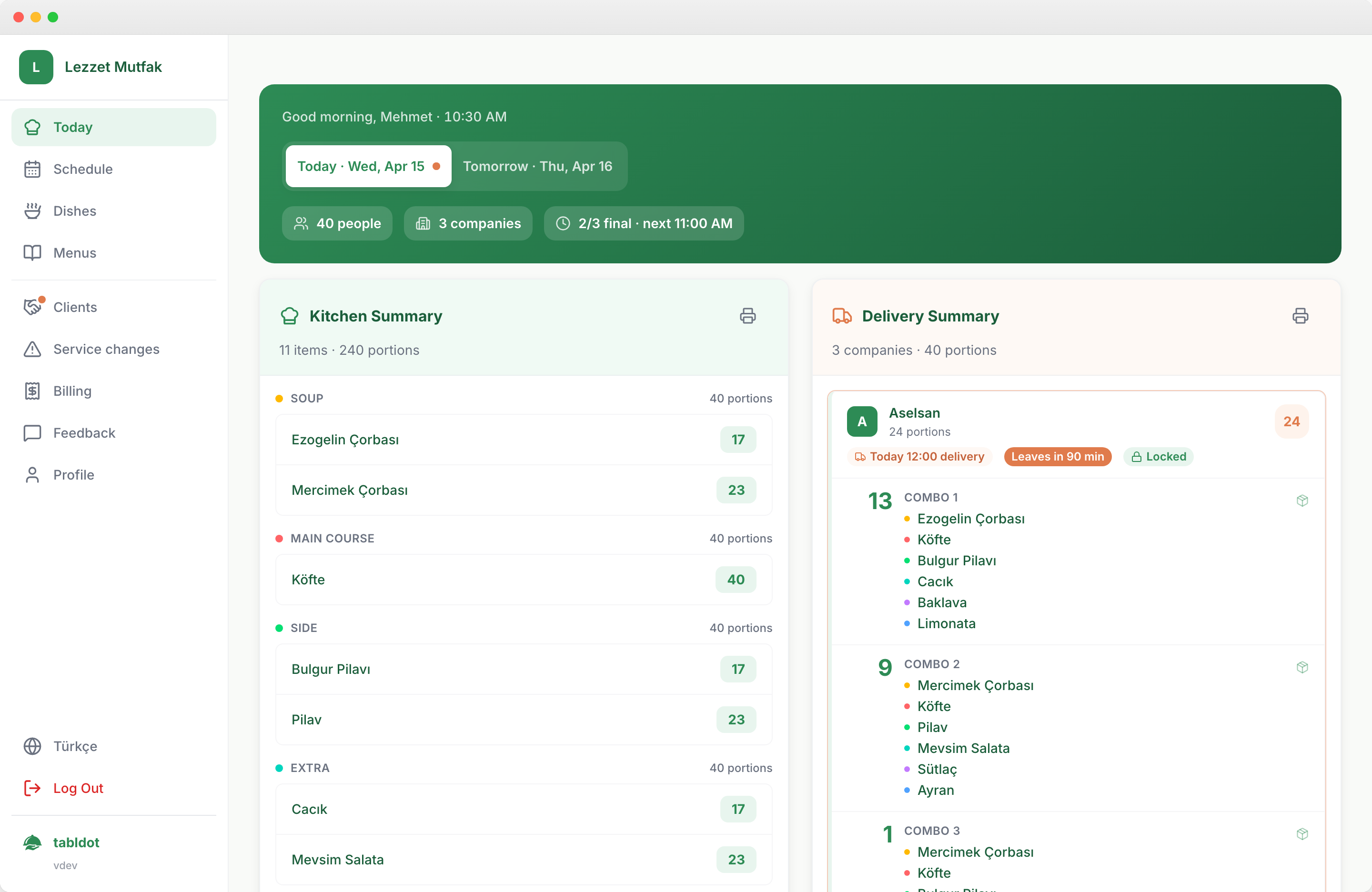
Ordering, headcount, absence, invoicing: all in one screen. Zero manual work.
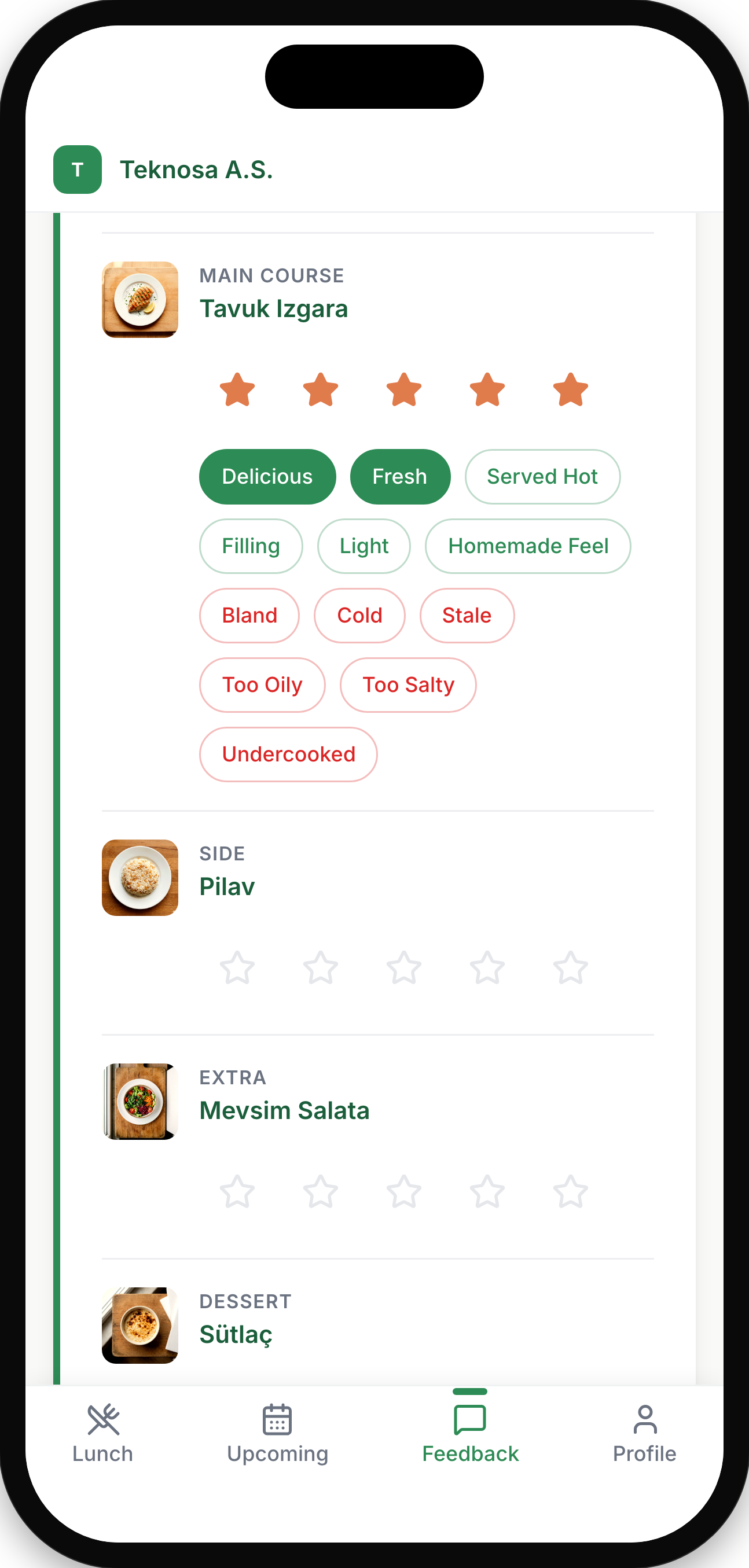
Employees rate every meal. Caterers get instant feedback. Issues caught before complaints.
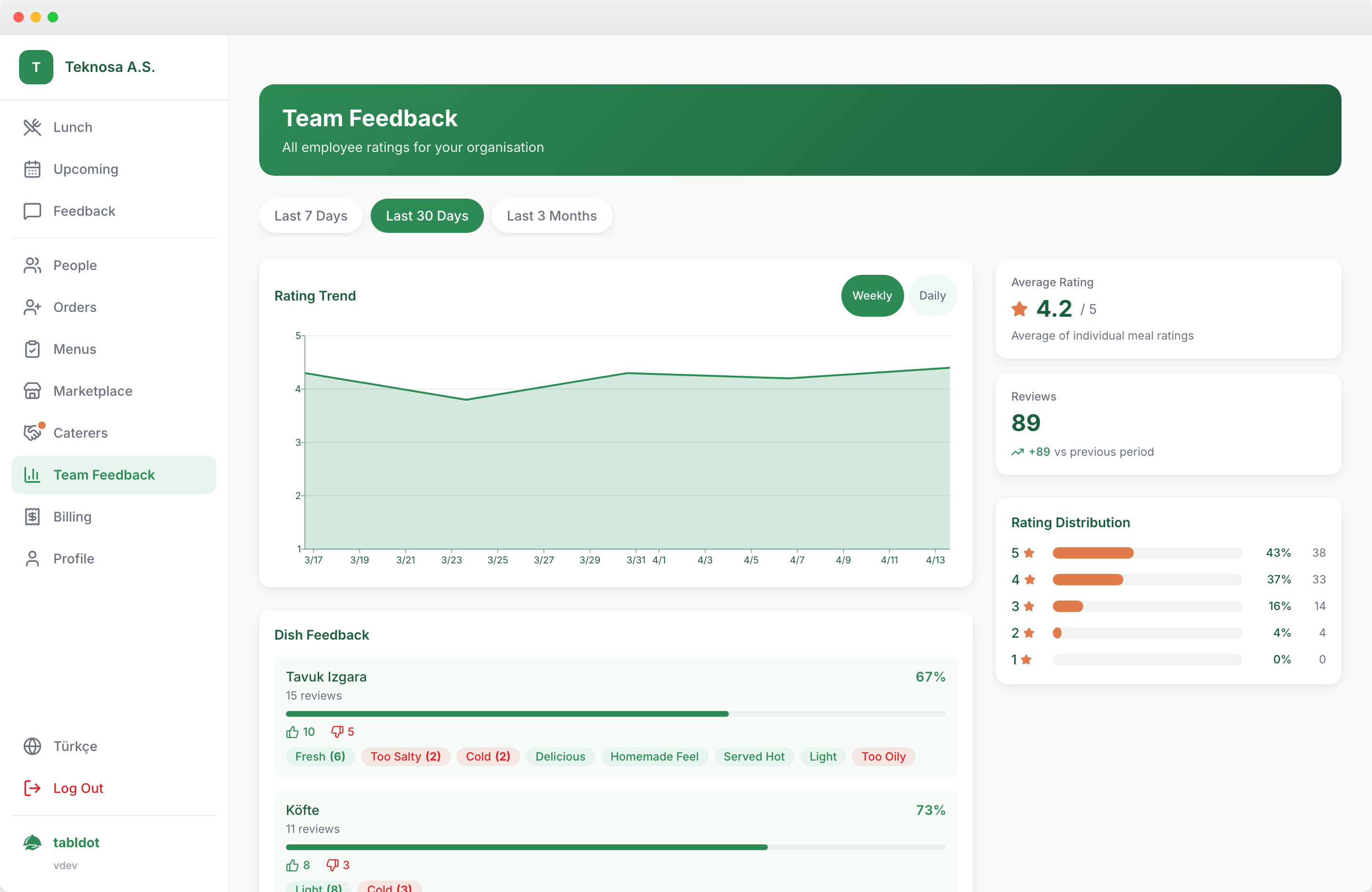
Rating trends, per-dish distribution, and period comparisons. See issues before they become complaints.
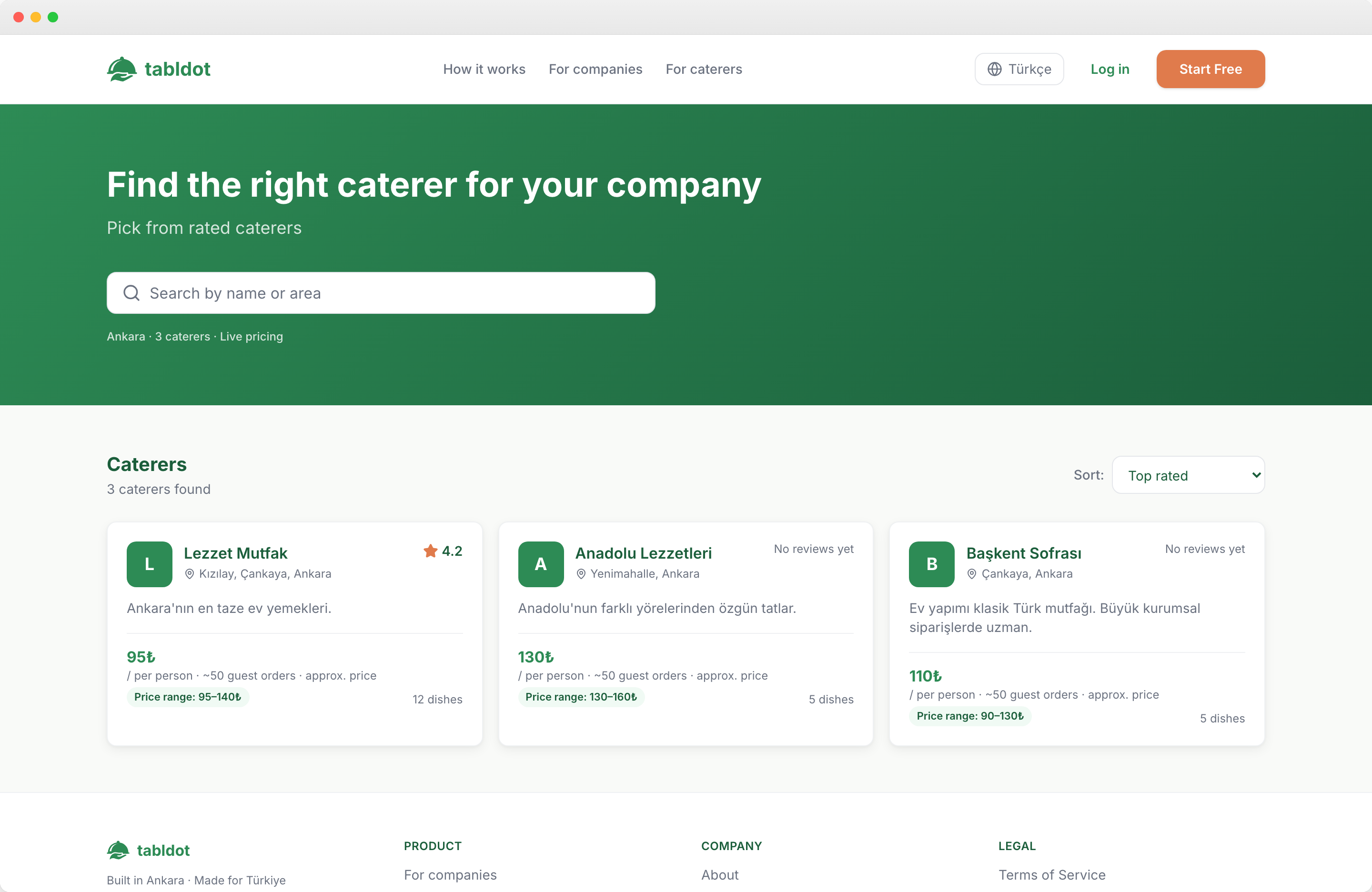
Compare caterers in your area. Marketplace is live; no lock-in, switch anytime.
Free for companies. First pilot team live in 2 weeks.
| Meal Card | CaterDeck | |
|---|---|---|
| Employer cost (for 500 ₺ net) | 655 ₺/day | 500 ₺/day |
| Employee net value | 500 ₺/day | 500 ₺/day |
| Tax exemption | Capped (330 ₺ GV, 300 ₺ SGK) | Unlimited (GVK 23/8) |
| Food value per 500 ₺† | ~150 ₺ | ~250 ₺ |
| Payment timing | Pre-load (before month) | Invoice (after month) |
| Lunch break duration | 60 min/day | 15 min/day |
| Employee satisfaction data | None | Real-time ratings |
| Contract lock-in | Annual contracts | None, cancel anytime |
| Caterer switching | N/A | Marketplace |
Your employees eat better. You pay less.
Practical answers on meal cards, current caterers, billing, and employee experience.
Yes. Your current caterer can join CaterDeck and remain your meal-service provider. Before active service starts, the caterer goes through onboarding; food-business registration or approval, workplace license, tax certificate, signing authority, capacity, and other required documents are checked. Daily selections, headcount, delivery tracking, invoice reconciliation, and collection then run through CaterDeck.
In most companies, lunch coordination means daily headcount chasing, WhatsApp/Excel tracking, delivery checks, and invoice reconciliation. With CaterDeck, employee selections are captured in the platform; headcount, menu, deadlines, delivery, and monthly reconciliation are visible in one panel. The admin works on exceptions, approvals, and service quality rather than daily chasing.
Under the intermediation model, the food-service invoice is issued by the relevant caterer to the company. CaterDeck does not resell the meal service or issue the food invoice to the company. Under the platform terms and the caterer's collection authorization, CaterDeck may collect payment from the company; that payment settles the company's debt to the relevant caterer. CaterDeck earns its revenue through the intermediation/service-fee invoice it issues to the caterer. The target company experience is one reconciliation and payment flow.
In the pilot model, after month close the company pays by bank transfer to the collection account designated by CaterDeck. Under the contractual collection authorization, this payment is treated as payment to the relevant caterer. CaterDeck matches the collection, applies any credits/adjustments and service-fee offsets, and pays the caterer's net entitlement on the agreed schedule.
Before the deadline, employee selections and bulk orders can be updated. After the deadline, changes affect production and may not be accepted automatically in the platform; CaterDeck and the caterer may need to confirm them manually.
Yes. The company accepts the platform terms once, and the caterer operates under CaterDeck's intermediation agreement. Each new match is opened through an active link/transaction record. This lets the company switch caterers inside the platform; a separate wet-signed company-caterer agreement is not the target flow for each switch.
In the target flow, no. The company accepts CaterDeck's platform terms; the caterer accepts CaterDeck's intermediation agreement; the standard food-service terms between the company and the caterer are bound through the active link/transaction record. The active link records the caterer, service period, location, price, delivery time, deadline, invoice, and collection terms.
The pilot target is no fixed term and no minimum commitment on the company side. The company can end an active match through the platform or by written notice. Days whose deadline has not passed are cancelled; days past the deadline may be delivered and included in invoice reconciliation because production has started. Past invoice, collection, and dispute records are retained for the legally required periods.
CaterDeck is the first operational point of contact. Late delivery, missing portions, quality complaints, allergen claims, and food-safety incidents are reported to CaterDeck. CaterDeck follows up with the caterer and, where needed, runs the credit, adjustment, substitution, or entitlement-offset process under the contractual rules.
No. CaterDeck does not issue any meal card, wallet, balance, coupon, or payment instrument to employees. The app is used only to choose a meal and consume the workplace service; employees do not pay at a restaurant or off-site.

First pilot team live in 2 weeks. Start with one team.
Free for companies. No risk.